
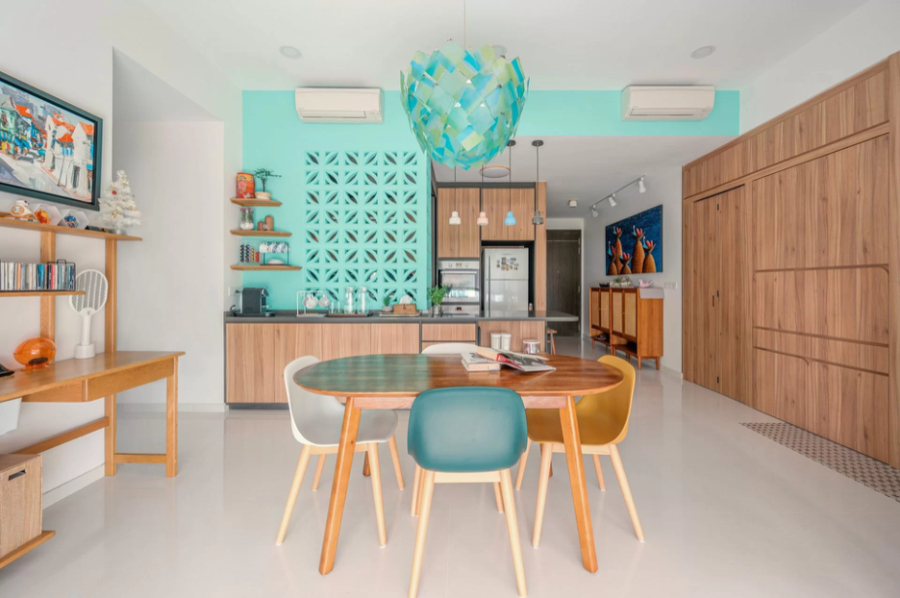
Pattern play is making a confident comeback in contemporary interior design. From the nostalgic flecks of terrazzo to the structured charm of herringbone, patterns are no longer just accents—they are centrepieces that shape the personality of a room. These styles not only bring visual interest but also lend texture, depth, and a sense of rhythm to any space. Whether you’re renovating a minimalist condo or revamping a 5-room HDB interior design, the right pattern can set the tone for your entire home.
Terrazzo is back with a modern twist
Once a staple in mid-century design, terrazzo has returned with a vengeance—but this time with a fresher, more sophisticated spin. No longer confined to flooring alone, terrazzo now appears in countertops, wall features, and even accessories like lamps and planters. Its playful mosaic of marble, quartz, granite, and glass chips set in cement or resin makes every piece unique.
The charm of terrazzo lies in its ability to bridge traditional and contemporary aesthetics. In a modern home, a terrazzo feature wall or kitchen island can offer an artful contrast to sleek cabinetry or neutral-toned furnishings. It’s particularly effective in open-plan layouts where subtle demarcation is needed without constructing physical barriers. Designers are increasingly embracing bold colourways and large-format terrazzo tiles to create visual cohesion and character.
Herringbone brings classic elegance
For those who prefer order and structure in their home design style, herringbone is an enduring favourite. This V-shaped weaving pattern—typically seen in wood flooring or tilework—adds timeless elegance to both traditional and contemporary interiors. Its symmetrical layout gives a sense of movement, guiding the eye across a space in a way that feels intentional yet organic.
Used cleverly, herringbone can become the focal point of a room. Consider a feature wall in a herringbone tile for your bathroom or an accent floor that transitions from hallway to living area. When applied to timber or engineered wood, it also introduces warmth, texture, and a touch of luxury that flat-laid boards often can’t replicate.
This pattern works especially well in smaller areas like entryways, powder rooms, or walk-in wardrobes where its intricate detail can be fully appreciated. In larger layouts, such as a 5-room HDB interior design, herringbone can be used to subtly delineate zones or enhance the architecture’s flow.
Geometric patterns balance modernity and minimalism
Beyond terrazzo and herringbone, geometric patterns offer limitless possibilities for homeowners who want to embrace pattern while keeping things sleek and minimal. Hexagons, triangles, and grid motifs can be integrated into tiling, wallpaper, and even soft furnishings.
For instance, a monochrome hexagonal backsplash in the kitchen can add an understated design edge, while still remaining easy to coordinate with various cabinetry styles. In the living room, a geometric-patterned rug can bring energy and personality to an otherwise neutral palette.
To keep these patterns feeling contemporary, balance is key. Avoid overwhelming the space by pairing bold patterns with solid tones, and stick to a cohesive colour scheme. These thoughtful contrasts ensure the design remains harmonious without veering into maximalism.
Mixing patterns like a pro
Combining different patterns can be intimidating, but when done correctly, it brings a rich visual narrative to the home. The secret lies in varying the scale and tone. Pair a large terrazzo floor with finer herringbone tilework on the wall, or contrast geometric wallpaper with organic elements like wood and linen to create layers of visual intrigue.
In larger spaces such as multi-bedroom apartments or HDB flats, mixing patterns across different rooms can create a unique yet cohesive aesthetic. This technique gives each space its own identity while maintaining a unified design language throughout the home.
An experienced interior design consultancy firm in Singapore can offer expert guidance on how to mix and match these elements successfully, ensuring a curated look that doesn’t feel chaotic. This is particularly useful when you’re dealing with complex layouts or limited natural light, where the wrong pattern could easily dominate or darken the space.
Colour and material choices amplify patterns
While pattern itself can add personality, colour and material are the amplifiers that make or break the overall effect. Soft pastel terrazzo brings a completely different mood than high-contrast black-and-white variants. Similarly, light oak herringbone flooring feels airy and Scandinavian, while dark walnut adds richness and drama.
Materials like matte cement, high-gloss ceramic, or textured wallpaper each interact with light differently, affecting how the pattern is perceived throughout the day. Consider how natural lighting or artificial fixtures might play off these surfaces before finalising your choices.
For a harmonious home, select two or three patterns and build your materials and colour palette around them. This ensures cohesion while still giving each room a distinct personality.
Conclusion
Patterns are no longer confined to accent pillows or occasional rugs—they are now at the heart of thoughtful, modern design. From the timeless sophistication of herringbone to the playful unpredictability of terrazzo, pattern play adds vitality, contrast, and character to your living space. When used with intention, these elements can elevate even the simplest interiors into something memorable and meaningful.
If you’re seeking expert guidance to explore pattern-rich concepts while maintaining functional elegance, Fuse Concept is here to help. Our team blends creativity and technical know-how to bring your design vision to life.