
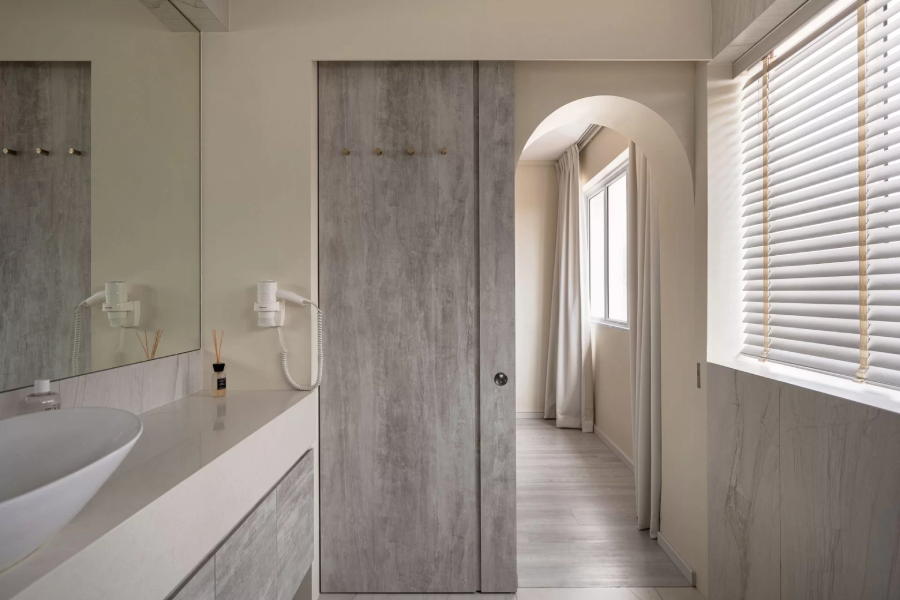
Japandi interior design has emerged as a go-to style for homeowners seeking a blend of tranquillity, functionality, and timeless beauty. A harmonious fusion of Japanese minimalism and Scandinavian cosiness, Japandi creates calm, clutter-free environments while embracing natural textures and refined aesthetics. By incorporating luxury through carefully chosen materials and finishes, this approach is particularly well-suited for urban living, offering serenity without sacrificing sophistication—perfect for modern homes across Singapore.
If you’re considering a new look for your living space, these Japandi interior design ideas might be the inspiration you need to achieve balance, comfort, and elegance.
Choose a neutral and earthy colour palette
At the heart of Japandi style lies a carefully curated colour scheme. Think warm neutrals like sand, taupe, off-white, soft greys, and muted greens. These tones are calming and create a gentle backdrop that allows natural materials and textures to shine. Unlike bold colour trends, the Japandi palette brings peace to any room while still looking stylish and contemporary.
This aesthetic works beautifully in both large apartments and small condo interior design in Singapore, where visual openness and brightness are key. Lighter walls paired with mid-toned woods can give even the most compact rooms a sense of spaciousness and warmth.
Prioritise functional furniture with clean lines
Functionality meets elegance in Japandi furniture. Pieces are selected not only for their visual appeal but also for their purpose. Low-profile sofas, open shelving, and multifunctional storage solutions are common choices. Furnishings with clean lines and simple forms help maintain an uncluttered atmosphere.
Opt for materials such as oak, ash, bamboo, or rattan to reflect natural elements. Fabric choices often lean toward linen or cotton in neutral tones, enhancing the organic feel of the home. Investing in well-crafted, long-lasting furniture echoes both Japanese craftsmanship and Scandinavian durability—two qualities central to this design style.
Let natural light and nature take centre stage
Japandi interiors are designed to feel connected to the natural world. Incorporating natural light is a cornerstone of this approach. If you have large windows, keep them unobstructed or opt for sheer curtains to maximise daylight. For homes where natural lighting is limited, consider adding warm, ambient lighting that mimics daylight tones.
Plants also play a vital role. Minimal greenery, like bonsai trees, peace lilies, or monstera, add life to the space without creating visual noise. This subtle integration of biophilic design principles promotes well-being and reinforces a tranquil environment.
Declutter and embrace mindful simplicity
One of the most defining traits of Japandi is its emphasis on intentional living. This means decluttering and focusing on what truly adds value to your daily life. Every item in a Japandi space should serve a purpose or bring joy.
Storage becomes an essential component, especially in smaller living areas. Built-in cabinetry, modular storage solutions, and multi-use furniture allow for neat organisation without sacrificing aesthetics. It’s an ideal direction for those working with an interior design consultancy firm in Singapore that understands how to maximise utility in compact homes.
Incorporate handmade and imperfect elements
While Japandi celebrates minimalism, it also welcomes the wabi-sabi philosophy from Japanese culture, which finds beauty in imperfection and impermanence. This might take the form of hand-thrown pottery, a raw-edged wooden coffee table, or textiles with slight variations in texture or tone.
These handmade touches bring soul and character to the otherwise streamlined and orderly space. Layering materials—such as linen throws, wool rugs, and stoneware—helps to soften the clean lines and creates a lived-in yet curated atmosphere.
Create quiet corners for rest and reflection
A Japandi home is not just about looks—it’s about how it makes you feel. Creating quiet corners that encourage mindfulness is a powerful way to integrate this philosophy into your home. A simple reading nook with a floor cushion and side table, a minimal desk for journalling, or a serene tea station can foster daily rituals of calm and presence.
These elements are particularly impactful in urban homes where the pace of life can be overwhelming. Dedicating even a small corner to stillness adds purpose to your design and offers a mental sanctuary from external stressors.
Balance negative space with curated décor
Unlike more decorative interior styles, Japandi design places importance on negative space—the areas that are left unfilled. This doesn’t mean your home should feel empty, but rather, every décor item should be selected with intent.
A curated approach to art and accessories ensures that each item contributes to the overall harmony. Think of framed black-and-white prints, simple ceramic vases, or a single sculptural piece on a console table. These finishing touches bring personality without overwhelming the senses.
Conclusion
Japandi interior design speaks to those who value clarity, calm, and timeless elegance. Whether you’re redesigning a large home or working within the limits of a small apartment, the Japandi approach offers a flexible and deeply rewarding style direction. By embracing functionality, natural materials, and a clutter-free mindset, you can transform your space into a serene retreat.
If you’re ready to bring Japandi into your home, the expert team at Fuse Concept is here to help. As a trusted interior design partner in Singapore, we understand how to tailor this aesthetic to suit your unique lifestyle and living space. Let us help you craft a calming and modern home that resonates with quiet luxury and purposeful design.